Challenging $250 Million in Competitor Subsidies
A state-backed competitor kept winning defence contracts without competition. Where did its money really come from?
An image is worth a thousand words. Tisserand keeps the thousand words behind it.
The question
Is our competitor receiving disguised subsidies, and which ones can be challenged?
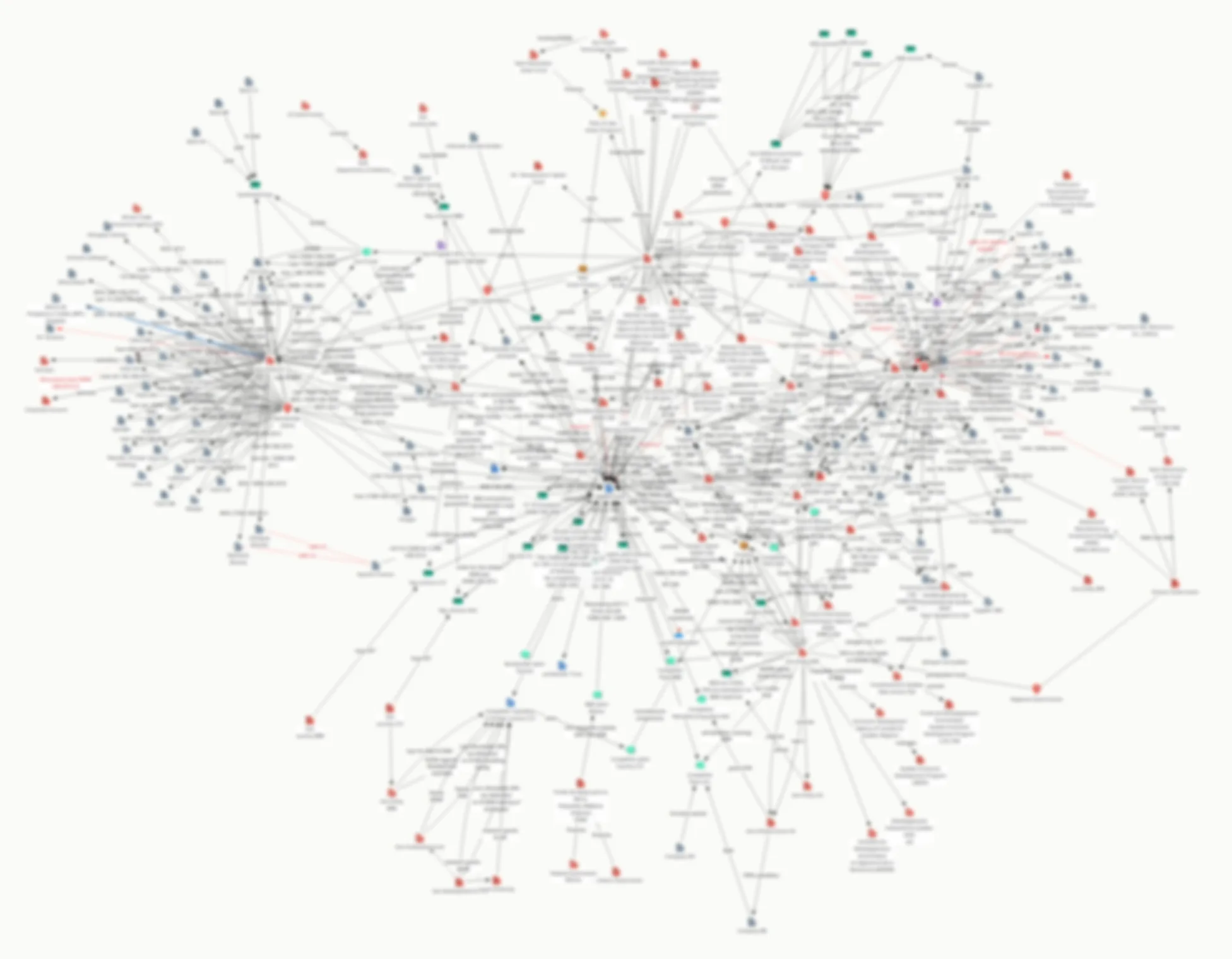
1 / The whole funding network
Nearly 200 entities and 500 relationships around the competitor: governments, agencies, banks, suppliers, customers and contracts. All text is blurred to protect our client; the next views show it channel by channel.
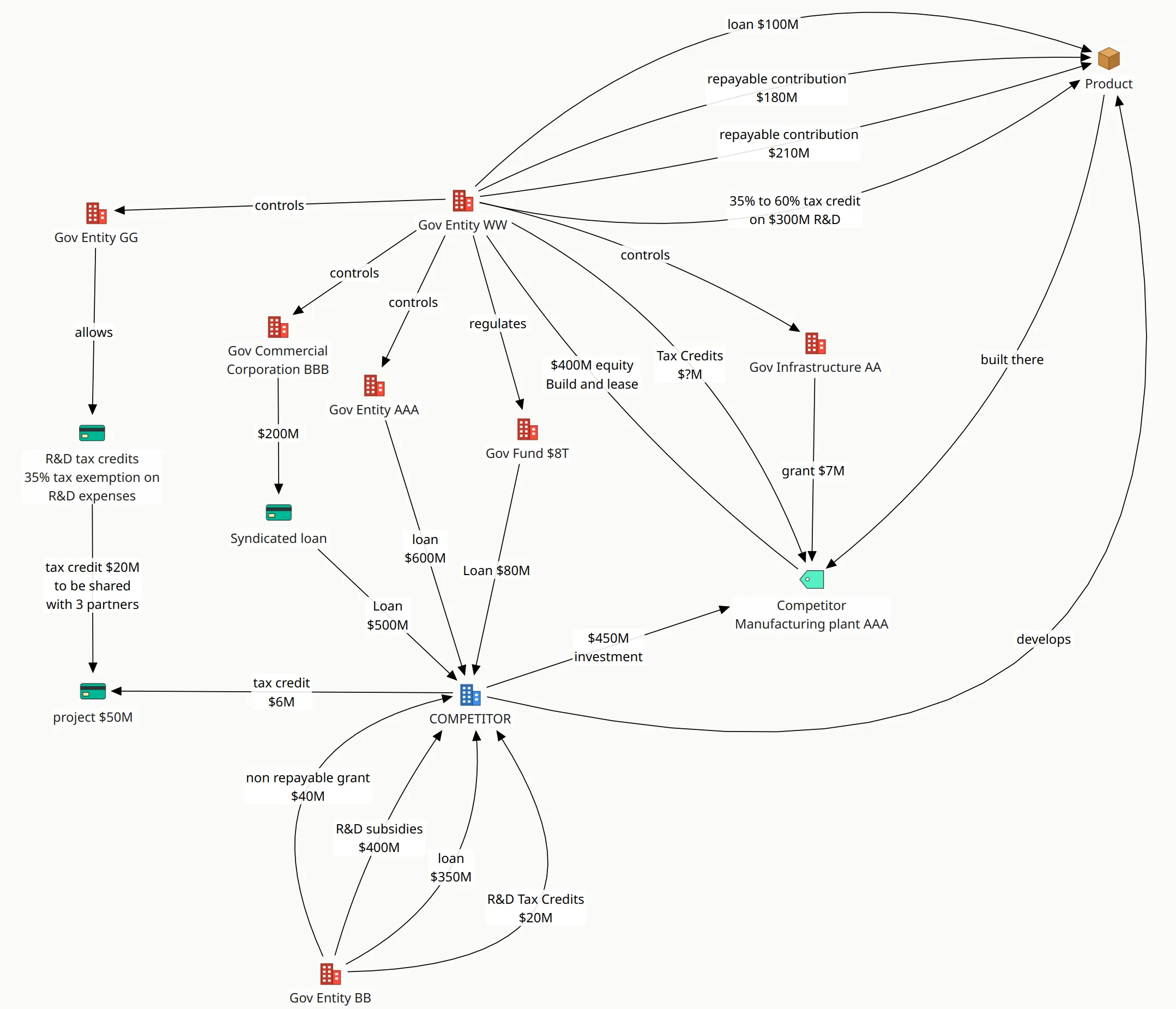
2 / Direct support: loans, tax credits and grants
Seven state bodies fund the competitor, its product and its plant: loans, repayable contributions, R&D tax credits and grants.
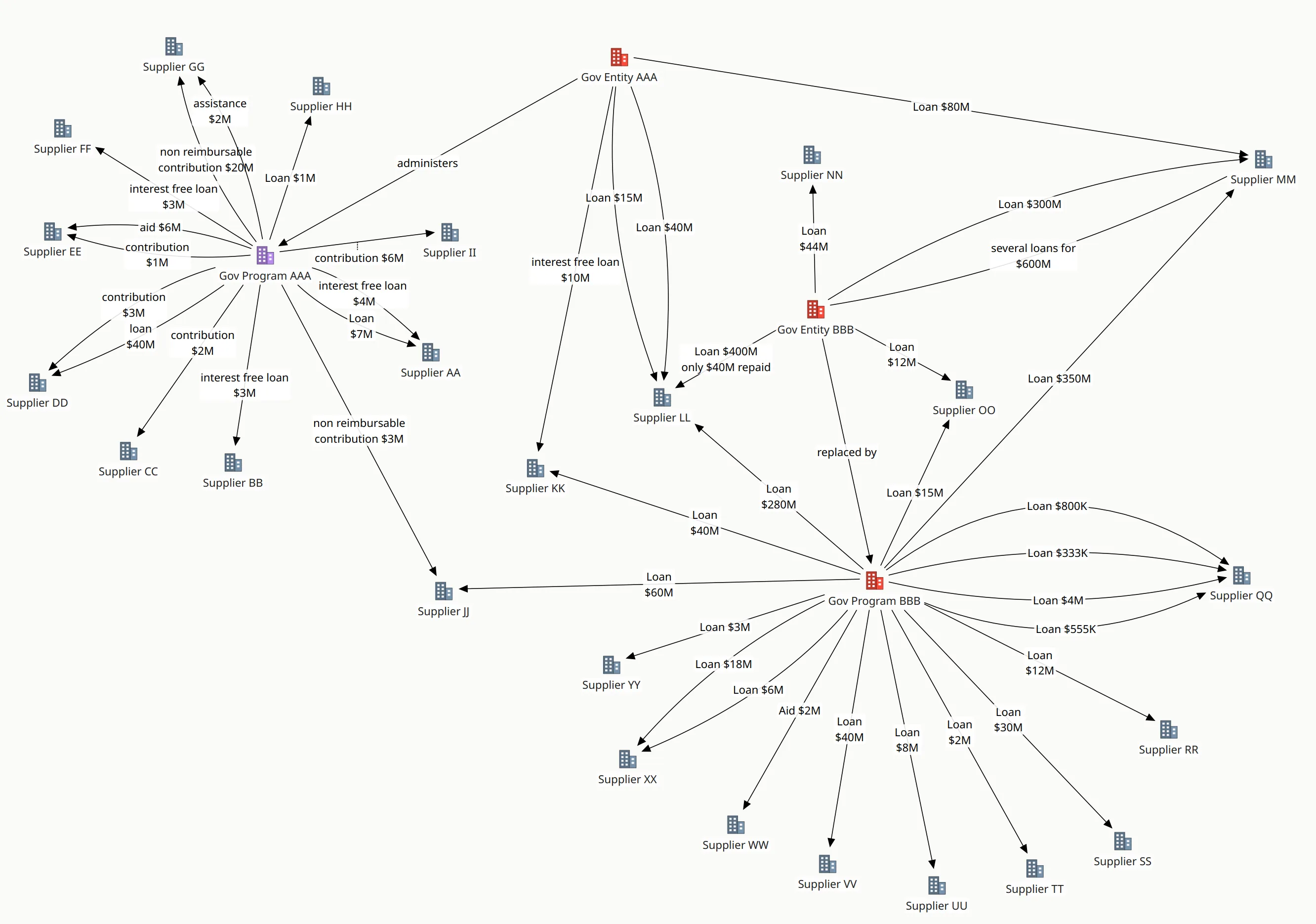
3 / One tier down: the suppliers
Two state programmes lend to some two dozen of the competitor’s suppliers: interest-free loans, non-reimbursable contributions, and a $400M loan of which only $40M was repaid.
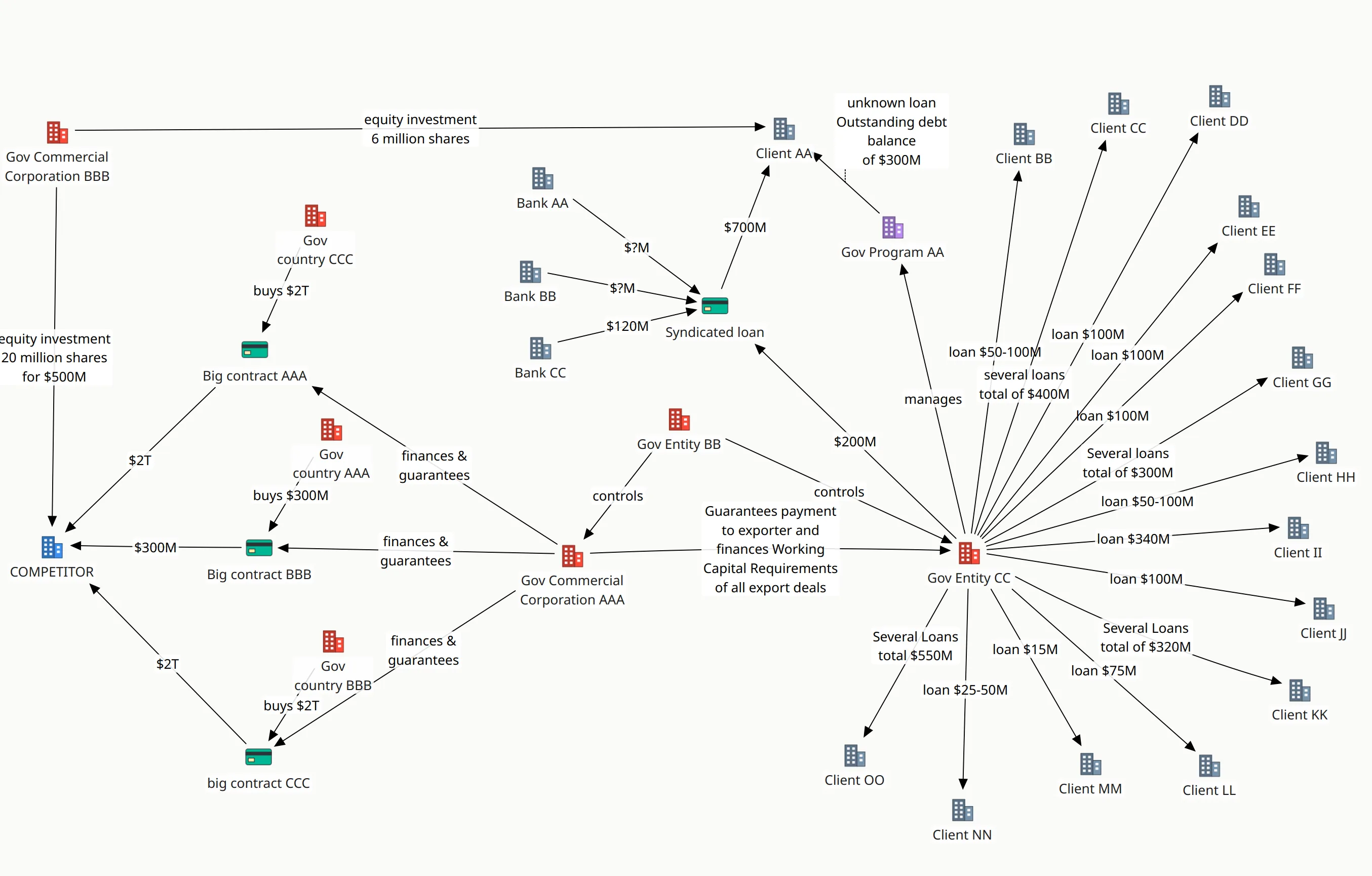
4 / The demand side: the customers
A state export agency lends to the competitor’s customers and guarantees payment on every export deal. A state corporation finances and guarantees the foreign-government contracts the competitor wins.
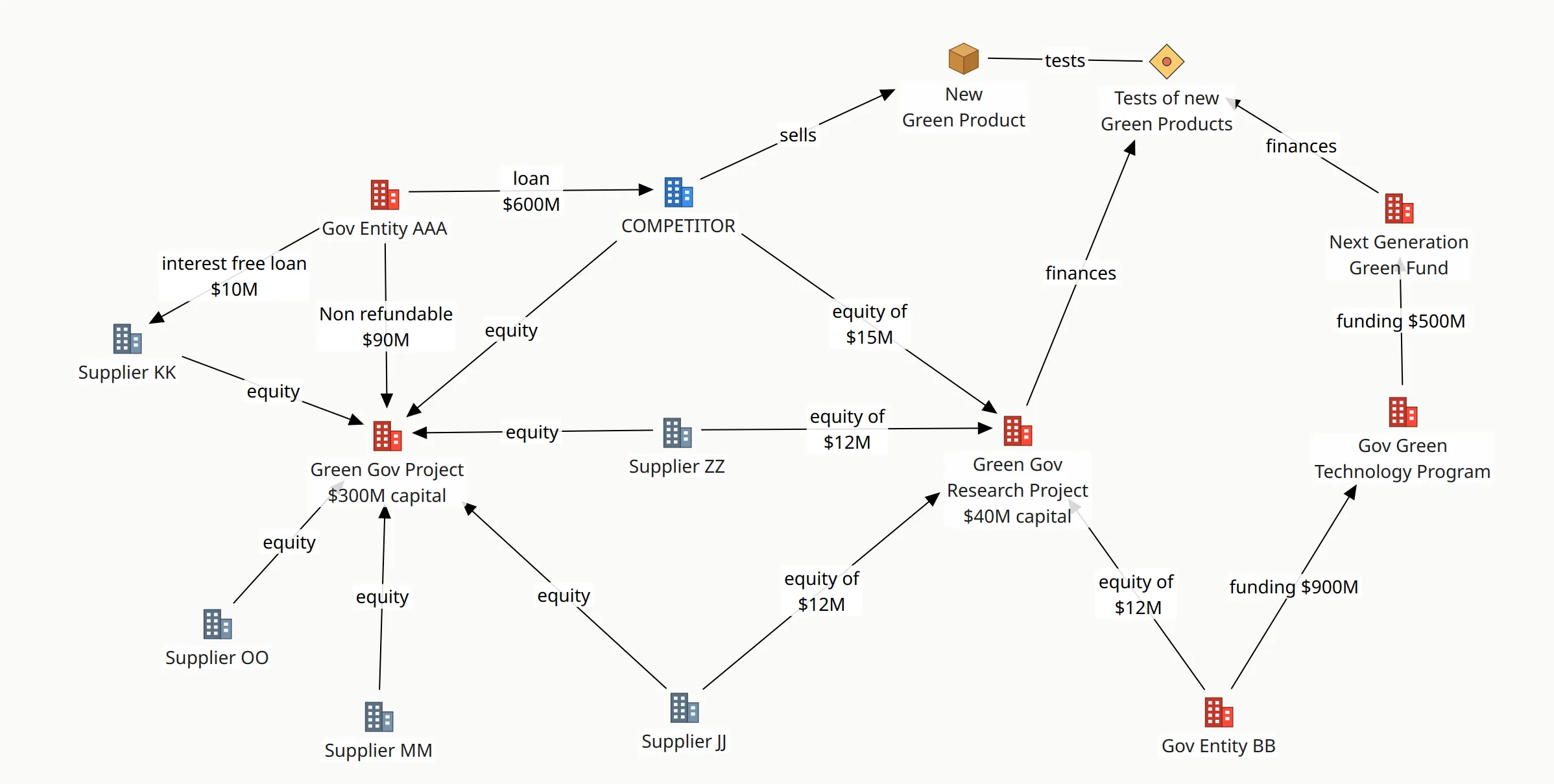
5 / Green projects
State-funded green projects, in which the competitor and its suppliers hold equity, pay for testing the competitor’s new green product.
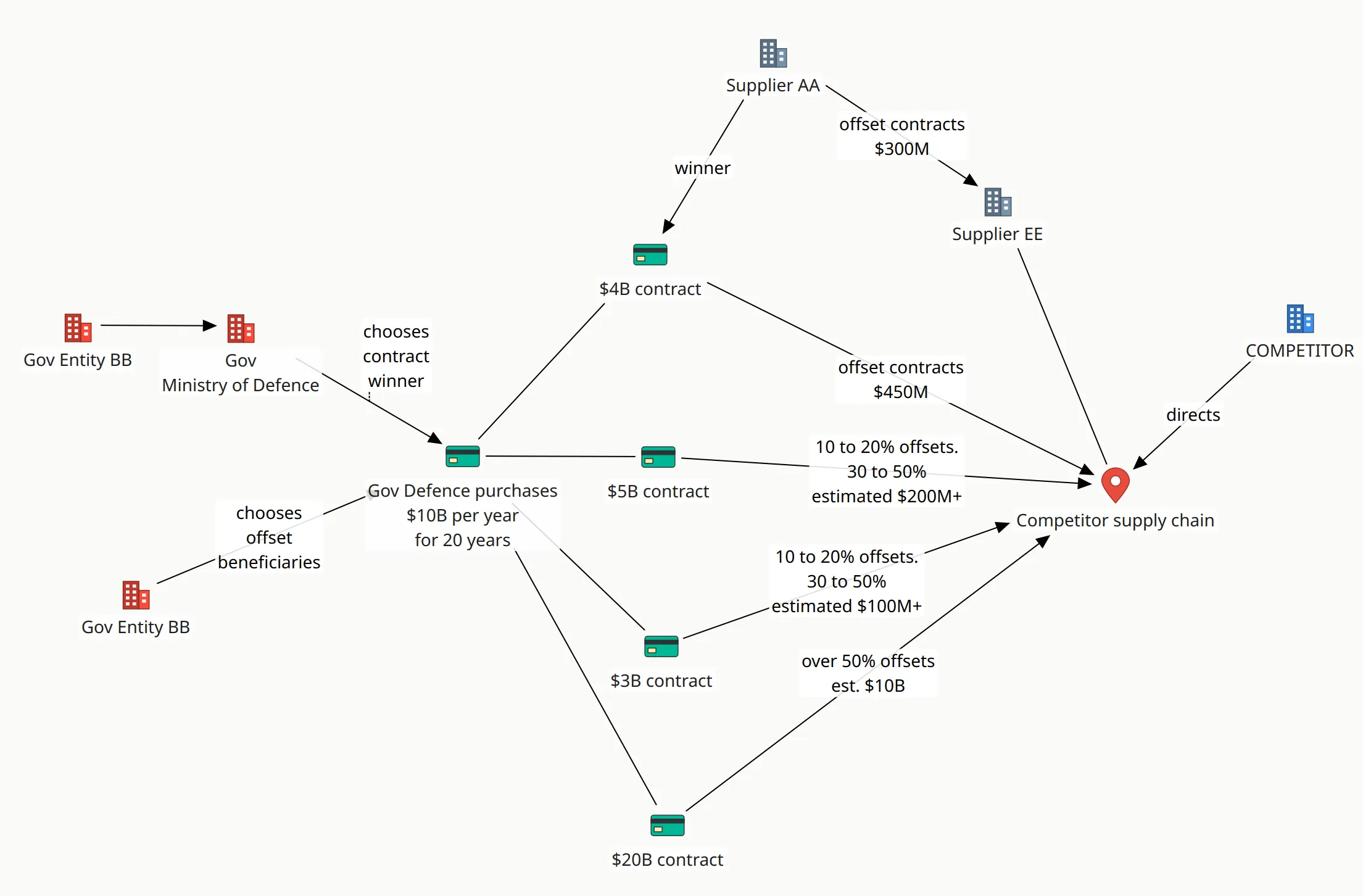
6 / Offsets redirected
When foreign suppliers win defence contracts, a state body decides who receives the offset obligations, and directs them to the competitor’s supply chain (an estimated $10B on the largest contract).
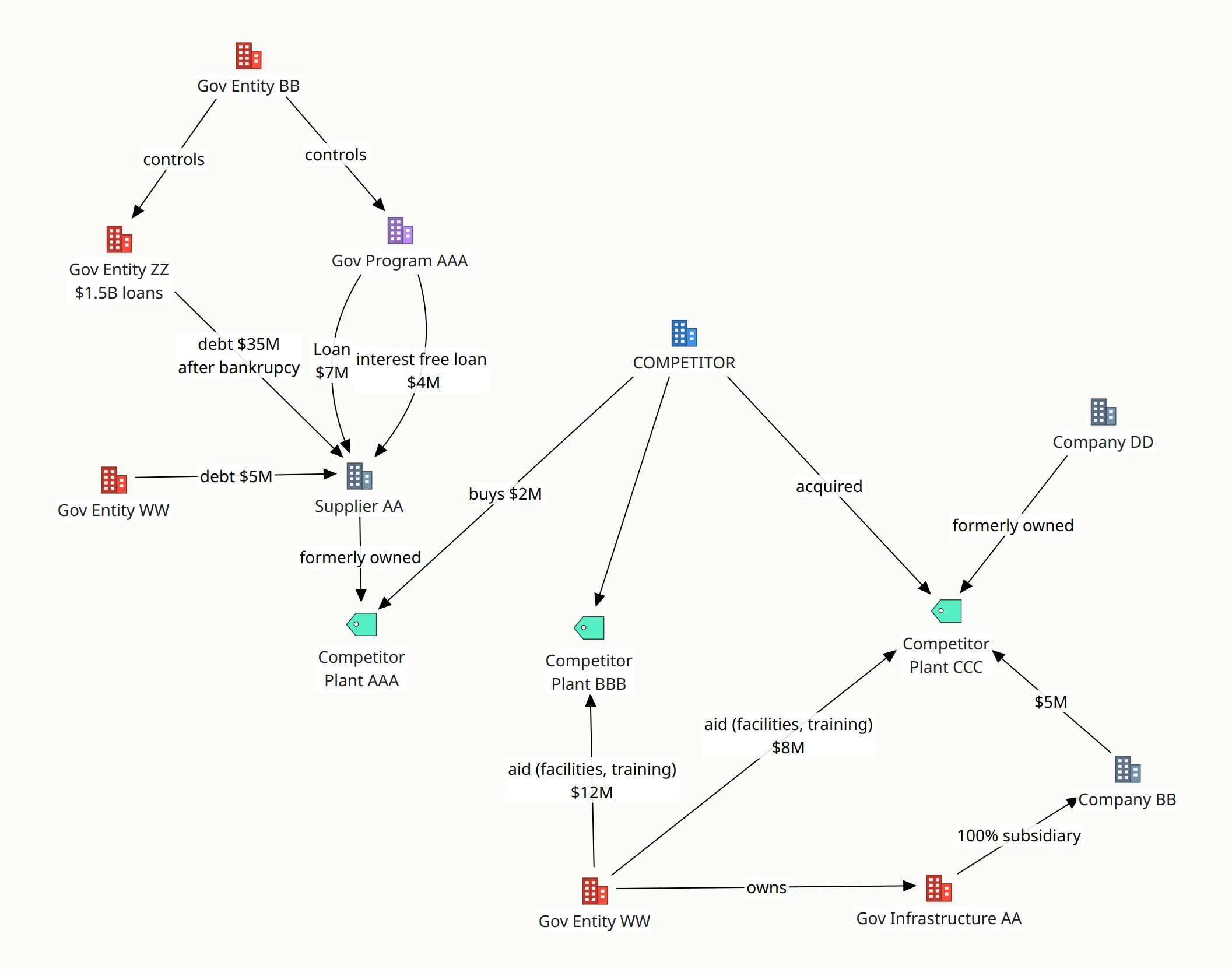
7 / Plants rescued, then bought
State bodies lent to and wrote off debt for a supplier whose plant the competitor then bought for $2M. Two other plants received aid for facilities and training.
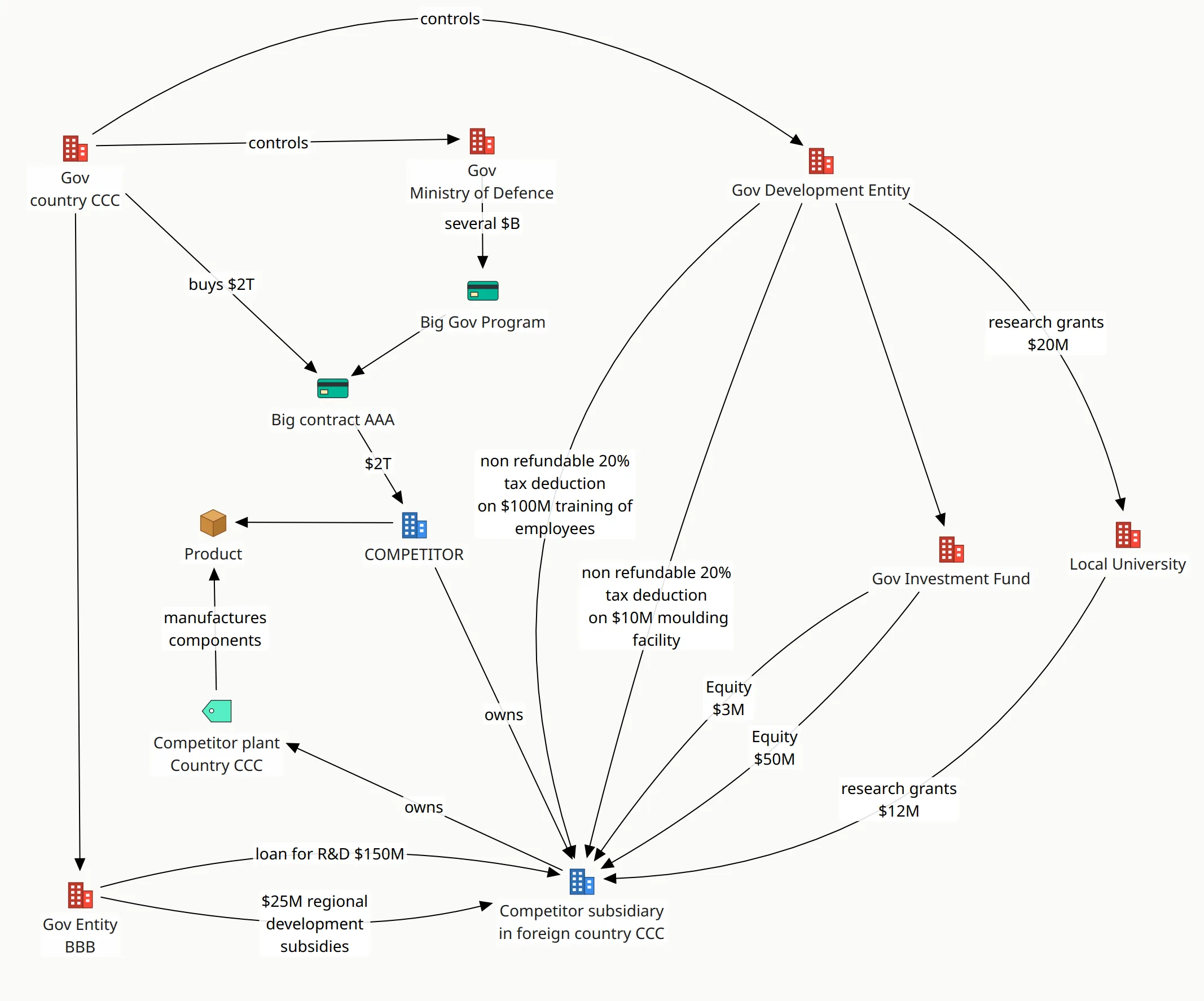
8 / Abroad too
In Country CCC, the government that buys from the competitor also funds its local subsidiary: tax deductions, equity, research grants through a university and a $150M R&D loan.
The outcome
Public information was scarce. Our analysts traced the funding streams and showed that many had been granted in breach of the rules: $250M of subsidies were cancelled. The result is theirs; Tisserand was their tool for mapping the network and keeping each link tied to its evidence.
For a strategy team: when a competitor's prices or contract wins look out of reach, map its funding, owners and contracts before concluding that it is simply more efficient.
Map the relationships behind your own market question.
Tell us about your question, your sources and the decision it should inform.